

LQG 2026/09/09 to 2026/09/12
Autumn Seminar – Trinity College Oxford – IP *OLO* Hybrid
LQG 2026 autumn seminar will take place at
Trinity College
Broad Street
Oxford
OX1 3BH
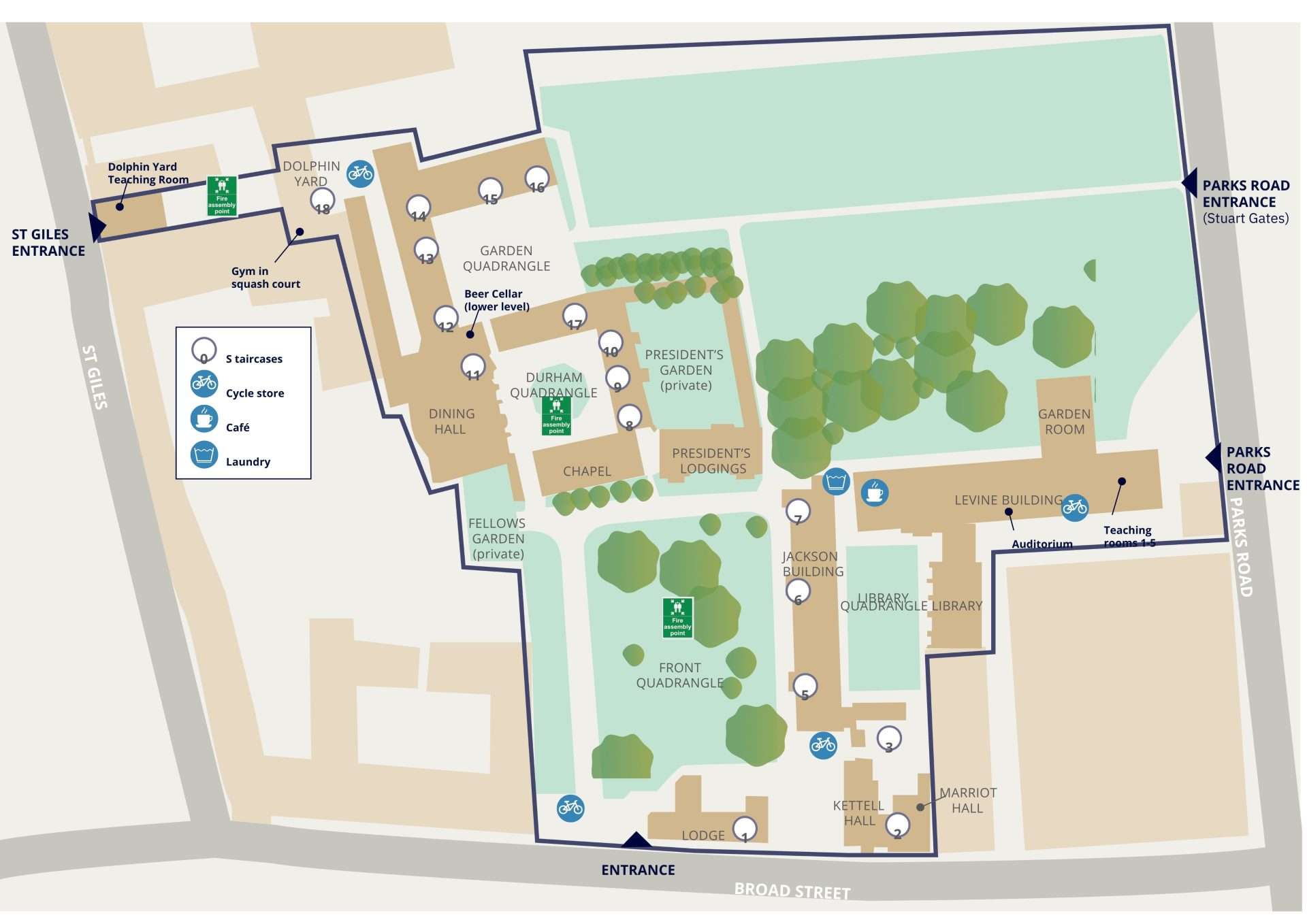
Click here for a venue map. Click here for a detailed plan of Trinity College Oxford. – the Levine Building and the Garden Room are on the right.
The Outline Agenda
Scroll down for speakers and topics.
Arrive on the afternoon / evening of 2026/09/09 to enjoy a welcome buffet.
Starting on Thursday 2026/09/10 the seminar will be held in Trinity College’s Garden Room, an amazing space in which we will enjoy the research and insights of eleven speakers of international renown.
On Thursday we shall dine at Balliol college while enjoying the spendour of their dining hall.
The all important speaker rankings – assessed by in-person attendees – will be announced at the final dinner in Trinity College on Friday night.
On Saturday you can take advantage of the opportunity to enjoy a stroll around Oxford and possibly some punting on the river.
Experienced LQGers please note that the 2026 seminar format does not allow for the punting challenge to be an integral part of the seminar as it has been in previous years.
Trinity College has delightful grounds and facilities in the centre of Oxford.
One ticket – delivers the seminar, all meals and accommodation.
All room bookings are for 3 nights including the Friday night.
College rooms are, obviously, college rooms – they are not 5* hotel quality but are very functional and comfortable and, despite what you may have heard, they have en-suite bathrooms and hot and cold running water! There are some double rooms available. Only book a double if you really need one.
Guests: Should you wish to bring a guest, a friend, partner or loved one (in some rare cases this may be the same person!) please buy an additional guest ticket to cover the social events and meals only. Your guest will be relieved to know that no seminar attendance is included (or required!) with the guest ticket
Parking is very scarce in Oxford and there is no parking at Trinity College.
Technology allowing all seminar sessions will be made available to the on-line audience.
The LQG looks forward to you joining the seminar.
To book your place use the red Access Code in the invitation sent by e-mail to those on the LQG mailing list which you can join by using the Join / Sign Up menu option above.
Register for the In-Person seminar here. The all-inclusive in-person seminar fee includes the seminar, accommodation in a single room with en-suite facilities and all meals. Guest tickets are available to join the social activities only.
Register for the On-Line seminars here. The support of the LQG’s sponsors, BlackRock, Snowflake, Bloomberg and especially the vision of LQG chairman Ed Fishwick means that the entire LQG autumn seminar will be available to on-line LQGers for free.
Voluntary donations to support the LQG are happily accepted when you register. If you do donate, Thank you!




The London Quant Group / LQG is a seminar organiser which contracts with Trinity College for the use of facilities; this event otherwise has no connection or association with the University of Oxford or its Colleges.
Schedule
Speakers, talk titles, abstracts and speaker biographies
Click on the title or speaker name to reveal the abstract / summary.
2026/09/10 Thursday 09:00 - 10:00 Bernd Scherer Investment Committees: Governance and Design Choices
Large investors love committees. Committees signal seriousness, distribute blame, and produce copious minutes. Whether they actually improve portfolios is less obvious.
Investment committees (ICs) are ubiquitous in institutional asset management. Asset owners rely on committees to set strategic policy, approve tactical tilts, and demonstrate fiduciary process.
Asset managers often maintain ICs to deliver an in-house view, coordinate risk budgets, and reduce key-person dependence.
Committees sit at the intersection of portfolio choice and organisational design.
Despite their prevalence, the economic case for how committees should be structured—and whether they even should centralise investment decisions remains surprisingly underdeveloped.
In this talk Bernd will view and treat an IC as a technology used to aggregate information into a central portfolio. He will also ask how that technology performs under realistic frictions, including heterogeneous beliefs, career incentives, status hierarchies, and noisy deliberation.
The paper on which this talk will be based is available here.
Bernd Scherer Head of Portfolio Implementation Abu Dhabi Investment Authority (ADIA)


Head of Portfolio Implementation
Abu Dhabi Investment Authority (ADIA)
Bernd is a long term friend and frequent speaker at the LQG. Bernd is an experienced CIO and academic writer. He currently works as the Head of Portfolio Implementation at Abu Dhabi Investment Authority (ADIA), one of the world’s largest sovereign wealth funds.
He has more than 20 years of experience in senior management positions for various hedge funds, asset management companies, and banks in New York, London, Vienna, and Frankfurt, where he designed and implemented quantitative investment strategies, products and processes, and successfully reorganized investment teams. Bernd is also a former Professor of Finance at EDHEC Business School, where he taught and researched on asset pricing, machine learning, portfolio construction, and risk management. He published more than 80 peer-reviewed articles in leading academic and practitioner Journals and currently serves on the editorial board of the Financial Analysts Journal.
2026/09/10 Thursday 10:00 – 11:00 Jason MacQueen Lessons learned in my life as a quant + Link to slides
When Jason MacQueen owned and operated Quantec Investment Technology he ran his first investment seminar in 1986 – in Oxford.
40 years later it is called the London Quant Group.
As Jason was essentially the founder of the LQG it is only fitting that he deliver a talk at the 2026 seminar.
In a major break with tradition Jason will not discuss portfolio construction… he will convey the “Lessons learned in my life as a quant”.
Jason was 29 years old when he began his career. Like most 29 year olds, he thought he knew everything. Turns out he was wrong – surprise!
In this talk he will share some of the lessons learned over his career….
so far!
Jason’s slides are available by clicking here.
Jason MacQueen Director of Research Smart Portfolio Strategies
 Jason MacQueen
Director of Research
Smart Portfolio Strategies
Jason MacQueen built the first equity risk models for all the developed markets outside the USA in the 1980s, and built the first Global risk model in the 1990s.
In 2000, he developed a patented risk-based technique which enabled the American Stock Exchange to offer Exchange Traded Funds (ETFs) on Actively-managed Mutual Funds, without knowing the underlying holdings.
In the 2000s he built Custom Hybrid Risk Models, including the Global Risk Model used by FactSet as the foundation of their Multi-Asset Class (MAC) product.
In the 2010s he developed a portfolio rebalancing algorithm to run Style factor strategies for Assetmark, growing their AUM from $260m to $2.38bn, a 9-fold increase in 4.5 years.
He is currently an Adjunct Professor at Fordham University in New York, where he teaches Masters in Quantitative Finance courses.
Naturally, very little of this was done on his own, and he is grateful for the support and help of various colleagues over the years. He is currently looking for his next challenge.
Jason has developed the theoretical framework of Markowitz and his successors into a practical set of tools for institutional fund managers. By his passionate pleas for a disciplined and logically coherent approach to portfolio management, he has acquired an international reputation as a speaker, consultant and iconoclast.
Jason began the QUANTEC Investment Seminars in 1986, which eventually metamorphosed into the London Quant Group, which therefore celebrates its 40th Anniversary this year, 2026.
2026/09/10 Thursday 11:30 - 12:30 Jose Menchero Global Equity Risk Models versus Integrated Models
Global investors may model the risk of their equity portfolios using one of two types of factor models. The first approach is a global equity model, which typically contains 100 or more factors (countries, global industries, and global styles). The second approach is an integrated model, which links together many local models (e.g., US, Japan, Europe) that collectively span the globe. Integrated equity models may easily contain over 500 local industry and style factors. In this presentation, we discuss some of the challenges involved in constructing integrated models and highlight the techniques used to solve them. We then conduct a systematic empirical analysis to compare the performance of global equity models versus integrated equity risk models. We find that integrated models typically provide more accurate risk forecasts and also produce more efficient optimized portfolios. Moreover, we find that integrated models typically provide more reliable representations of the sources of active return in performance attribution.
Jose Menchero Head of Portfolio Analytics Research Bloomberg
 Head of Portfolio Analytics Research
Bloomberg
Jose Menchero serves as Head of Portfolio Analytics Research at Bloomberg. Jose and his team are responsible for developing the analytics and algorithms used for factor risk models, portfolio risk and return attribution, scenario analysis, tail risk, portfolio construction, and portfolio optimization.
Prior to joining Bloomberg, Jose was the founder and CEO of Menchero Portfolio Analytics Consulting. Before founding his consulting firm, Jose worked for eight years at MSCI, where he was Managing Director responsible for developing the Barra equity risk models, and for portfolio construction research. Jose also served for seven years as Director of Research at Thomson Financial, where he developed several risk and return attribution methodologies, as well as equity factor risk models.
Jose has over 30 finance publications in leading practitioner journals. Before entering finance, Jose was Professor of Physics at the University of Rio de Janeiro in Brazil. Jose holds a PhD in theoretical physics from the University of California at Berkeley, and a BS degree in aerospace engineering from the University of Colorado at Boulder. Jose is a CFA Charterholder.
2026/09/10 Thursday 13:45 – 14:45 Ronald Kahn Enhancing a Risk Model by Adding Transient Statistical Factors
2026/09/10 Thursday 13:45 – 14:45 Ronald Kahn Enhancing a Risk Model by Adding Transient Statistical Factors
Ronald Kahn Global Head of Systematic Investment Research BlackRock
 Global Head of Systematic Equity Research
BlackRock
Ronald N. Kahn, PhD, Managing Director, is Global Head of Systematic Equity Research at BlackRock. He has overall responsibility for the research underpinning the Systematic Active Equity (SAE) products.
His service with the firm dates back to 1998, including his years with Barclays Global Investors (BGI), which merged with BlackRock in 2009. Prior to joining BGI, he worked as Director of Research at Barra, where his research covered equity and fixed income markets.
Ronald Kahn is a well-known expert on portfolio management and quantitative investing. He has published numerous articles on investment management, and, with Richard Grinold, authored the influential book Active Portfolio Management: Quantitative Theory and Applications. The two of them are the 2013 winners of James R. Vertin award, presented periodically by the CFA Institute to recognize individuals who have produced a body of research notable for its relevance and enduring value to investment professionals. He is a 2007 winner of the Bernstein Fabozzi/Jacobs Levy award for best article in the Journal of Portfolio Management. He serves on the editorial advisory boards of the Financial Analysts Journal, the Journal of Portfolio Management and the Journal of Investment Consulting. The 2007 book How I Became a Quant includes his essay describing his transition from physics to finance.
He earned an AB degree in physics, summa cum laude, from Princeton University, and a PhD in physics from Harvard University. He was a post-doctoral fellow in physics at University of California, Berkeley.
2026/09/10 Thursday 14:45 – 15:45 Álvaro Cartea AI Bubbles with Large Language Models + link to slides
AI agents participate in both rational and irrational bubbles. In a sequential bubble game, AI agents generate speculative trades even though there is a unique no-trade equilibrium. Increasing reasoning capacity reduces, but does not eliminate, such irrational bubbles. Chain-of-thought analysis shows that AI agents participate in irrational bubbles because they form incorrect beliefs through simplified expectations of the market, and they are sensitive to framing effects when forming their beliefs. When the environment admits both a no-trade equilibrium and a speculative bubble equilibrium, AI agents recognize this multiplicity and coordinate on the speculative equilibrium. Our results suggest that greater AI sophistication does not necessarily eliminate bubbles or improve market efficiency.
Alvaro’s slides can be accessed by clicking here.
Álvaro Cartea Director of the Oxford-Man Institute of Quantitative Finance (OMI)
 Director
Oxford-Man Institute of Quantitative Finance
Álvaro Cartea is Professor of Mathematical Finance at the Mathematical Institute, University of Oxford, director of the Oxford-Man Institute of Quantitative Finance, and a Fellow in Mathematics at St Hugh’s College, Oxford. Before joining Oxford, Álvaro was Reader in Mathematical Finance at University College London. Earlier in his career, he held the JP Morgan Lecturer in Financial Mathematics, Exeter College, University of Oxford. Álvaro obtained his doctorate from the University of Oxford in 2003.
2026/09/10 Thursday 16:00 – 17:00 Ed Fishwick The Vivaldi of Finance - An appreciation and critical assessment of the life and works of Jason MacQueen
The Vivaldi of Finance – An appreciation and critical assessment of the life and works of Jason MacQueen
Ed Fishwick Head of Research for the Risk and Quantitative Analysis Group BlackRock
 Head of Research for the Risk and Quantitative Analysis Group
BlackRock
Ed Fishwick, Senior Managing Director, is the The Head of Research for the Risk and Quantitative Analysis Group (RQA) at BlackRock.
Mr. Fishwick previously served as Chief Risk Officer and Global Head of RQA for four years, and before that as Global Co-Head of RQA for 15 years. His service with the firm dates back to 2003 including his time with Merrill Lynch Investment Management (MLIM) prior to its acquisition by BlackRock in 2006. At MLIM he was head of Risk and Quantitative Analysis, EMEA.
He is the Chairman of the London Quant Group.
2026/09/10 Friday 09:00 – 10:00 Tizian Otto Volatility Estimation via Machine Learning
Fundamental risk models are widely used for risk forecasting and portfolio optimisation. However, reliably estimating factor volatilities for these models is inherently challenging. Traditional approaches rely exclusively on historical returns, which gives rise to systematic biases: they tend to underforecast risk at the onset of crisis periods, when volatility spikes, and overforecast it during the subsequent normalisation, causing those risk models to react too slowly to regime shifts. To address this shortcoming, we move beyond purely return-based methods and incorporate information from additional conditioning variables, such as the option-implied market volatility, to better capture changes in the risk environment. In particular, we propose to estimate factor volatilities as a dynamic weighted average of multiple baseline volatilities, with blending weights determined by a machine learning (ML) model. Overall, we find that this ML-based framework can adjust the responsiveness of volatility estimates to changing market conditions while avoiding excessive noise in stable periods, resulting in lower bias and higher accuracy, especially during periods of market stress.
Tizian Otto Portfolio & Risk Analytics Researcher Bloomberg

Portfolio & Risk Analytics Researcher
Bloomberg
Tizian Otto, Ph.D., is a Researcher in the Portfolio & Risk Analytics Team at Bloomberg in London where he is leading the acceleration of machine learning adoption.
Prior to that, he was a Research Fellow at Yale University as well as a Visiting Research Scholar at Stanford University and Harvard University.
During his doctoral and postdoctoral studies, Tizian worked on the development of machine learning-based models to forecasting return, risk, and liquidity in different financial markets. Holding a Ph.D. in Finance from the University of Hamburg, Germany, he reviewed and published several articles on this topic in leading academic and practitioner journals.
2026/09/10 Friday 10:00 – 11:00 Danilo Mandic AI for Finance: Beyond the Hype + link to slides
For decades, finance has relied on classical statistical models which are powerful, but limited in capturing the unruly realities of human behaviour and global markets. Current AI developments are changing that landscape: they can read markets with a nuance once unique to human analysts, and do so at a scale no analyst could match. This talk moves beyond the buzzwords to examine what has actually changed, and what is possible. It rests upon three key components under the bonnet of AI: tensor-based methods for large-scale data analytics, graph structures for capturing domain knowledge, and foundation models for language and reasoning. Together, they enable AI to read and interpret the constant stream of global financial events and news in real time, and to connect raw numbers to the events driving them.
None of this is unambiguously good news. The same capabilities that let AI solve harder problems can, if left unchecked, produce opaque systems whose reasoning we cannot audit and whose failures we cannot anticipate. The talk closes on what “beyond the hype” in finance really requires: not just bigger models, but explainable ones that protect sensitive financial data and support decisions that can be trusted, understood, and managed – because in finance, a decision we can’t explain is a risk we can’t manage.
Professor Mandic’s arXiv page can be found here:
The slides can be accessed by clicking here – this is a huge file so may take time!
Danilo Mandic Professor of Machine Intelligence Imperial College London with Wuyang Zhou and Giorgos Iacovides
Danilo Mandic
Professor of Machine Intelligence
Imperial College London
Danilo P. Mandic is a Professor of Machine Intelligence with Imperial College London, UK, and has been working in the areas of machine intelligence, statistical signal processing, big data, and data analytics on graphs. He is a Fellow of the IEEE and past President of the International Neural Network Society (INNS). Dr Mandic has written five books, more than 700 articles and holds eight patents. He serves on the Council of Experts, within United Nations International Council on Environmental Economics and Development (ICEED).
 Wuyang Zhou
Ph.D. Candidate and Lead Research Scientist in the Artificial Intelligence and Data Analytics Lab
Imperial College London
Wuyang Zhou received his M.Eng. degree in electrical and electronic engineering from Imperial College London. He is a Ph.D. Candidate and Lead Research Scientist in the Artificial Intelligence and Data Analytics Lab at Imperial College London, supervised by Prof. Danilo Mandic. His research interests include efficient, scalable methods for large language models & financial NLP and quantum-inspired tensor networks.
 Giorgos Iacovides
Ph.D. Candidate and Lead Research Scientist in the Artificial Intelligence and Data Analytics Lab
Imperial College London
Giorgos Iacovides received his M.Eng. degree in electrical and electronic engineering from Imperial College London, with a year abroad at MIT. He is a Ph.D. Candidate and Lead Research Scientist in the Artificial Intelligence and Data Analytics Lab at Imperial College London, supervised by Prof. Danilo Mandic. His research interests include financial NLP, graph-based portfolio optimization, and tensor network models.
2026/09/10 Friday 11:30 – 12:30 Christian Julliard Alice in the Factor Zoo + link to slides
Hundreds of factors, and countless ways to combine them. The temptation is to surrender to the machines and let a black box hand you portfolio weights, with little sense of what drives them or when they might break. We go the other way, back to first principles: starting from the single pricing kernel that should price every asset, disciplined Bayesian model selection and aggregation turn the zoo from a statistical problem into an economic one. In the academic wonderland the payoff is striking: high but believable Sharpe ratios across stocks and corporate bonds. But does it survive the real world? We restrict to liquid names, charge realistic trading and price-impact costs at scale, and rebalance in real time. It does: the strategy stays market-neutral, with attractive Sharpe ratios, low turnover, and stable, scalable positions.
Christian’s slides are available by clicking here.
This talk comes with questions for attendees to consider which are available here AliceZoo_Questions:
or here: Link to Alice Zoo questions
OR:
Background readings for the talk:
1. Bayesian Solutions for the Factor Zoo (JF2023): https://onlinelibrary.wiley.com/doi/10.1111/jofi.13197
2. The Co-pricing Factor Zoo (JFE2026): https://doi.org/10.1016/j.jfineco.2026.104295
Christian Julliard Associate Professor London School of Economics

Associate Professor in the Department of Finance
Senior research associate of the Financial Market Group and the Paul Woolley Centre
Programme director of the Systemic Risk Centre
London School of Economics
Christian Julliard is an Associate Professor in the Department of Finance at the London School of Economics. He is also a senior research associate of the Financial Market Group and the Paul Woolley Centre, and a programme director of the Systemic Risk Centre. He has been the Finance PhD Programme director. He is also a research affiliate of the Financial Economics programme of the Centre for Economic Policy Research and has been a visiting assistant professor of economics and finance at the Tepper School of Business at Carnegie Mellon University.
His research interests span finance, macroeconomics, networks, and the frontier of applied econometrics.
His research has been widely published including in the Journal of Political Economy, The Journal of Finance, The Review of Financial Studies, the Journal of Financial Economics, Management Science, the Journal of International Economics, the Journal of Econometrics. He is/has been on the editorial boards of The Review of Economic Studies, the Journal of Empirical Finance and Economica.
He was awarded an M.Sc. and a Ph.D. in Economics by the Economics Department at Princeton University. He received a B.A. in International Economics and Business Studies from the University of Naples Partenope, an M.A. in Economics and Finance from the University of Naples Federico II, and a Dottorato di Ricerca in Public Economics from the University of Salerno.
2026/09/10 Friday 14:00 – 15:00 Pedro Castro The Architecture of Robustness
2026/09/10 Friday 14:00 – 15:00 Pedro Castro The Architecture of Robustness
Pedro Castro Head of Core Portfolio Management, Managing Director Man Group

Managing Director and Head of Core Portfolio Management
Man Group
Pedro is a Managing Director and Head of Core Portfolio Management, responsible for portfolio construction, research and management for all Solutions’ multi-strategy products and bespoke client mandates.
Pedro joined Man Group in 2024 as Head of Portfolio Engineering. Prior to this, he was Director of Risk and Quantitative Analysis at BlackRock, covering Multi-Asset Strategies and Solutions for 13 years. He was also responsible for driving the adoption and evolution of BlackRock’s strategic portfolio construction research across their investment and consulting platforms. Before that, he was a finance assistant lecturer at the University of Warwick.
Pedro holds a MSc in Finance and Economics, with distinction, from Warwick Business School and a BSc in Economics from Nova SBE. He is a CFA charterholder and a certified Financial Risk Manager (FRM).
2026/09/10 Friday 15:00 – 16:00 Ed Fishwick Quant: The Truth
Quant: The Truth
Ed Fishwick Head of Research for the Risk and Quantitative Analysis Group BlackRock
Head of Research for the Risk and Quantitative Analysis Group
BlackRock
Ed Fishwick, Senior Managing Director, is the The Head of Research for the Risk and Quantitative Analysis Group (RQA) at BlackRock.
Mr. Fishwick previously served as Chief Risk Officer and Global Head of RQA for four years, and before that as Global Co-Head of RQA for 15 years. His service with the firm dates back to 2003 including his time with Merrill Lynch Investment Management (MLIM) prior to its acquisition by BlackRock in 2006. At MLIM he was head of Risk and Quantitative Analysis, EMEA.
He is the Chairman of the London Quant Group.
Accommodation
Trinity College
Trinity College
Address: Broad Street, Oxford. OX1 3BH
– View map
Seminars will be delivered in the Garden Room in the Levine Building – see the plan
Trinity has delightful grounds and facilities in the centre of Oxford. The seminar room is marvellous, with the roof terrace above where we can enjoy coffee if the weather is good… or if it is bad we can go to the cafe.
One ticket – delivers the seminar, all meals and accommodation – what a deal!
All room bookings are for 3 nights including the Friday night. College rooms are, obviously, college rooms – they are not 5* hotel quality but very functional and comfortable and, despite what you may have heard, they have en-suite bathrooms and hot and cold running water!
Guests: Should you wish to bring a guest, please buy an additional guest ticket to cover the social events and meals only. Your guest will be relieved to know that no seminar attendance is included or required with the guest ticket!
Parking: There is NO car parking available at Trinity. Generally parking in Oxford is an expensive nightmare.
Please be aware that hotels in Oxford are expecting a city wide event the following week and expect to be very full. If you don’t want to stay in college book an hotel room ASAP. The LQG does not reserve hotel rooms.
Dinners and lunches
Trinity and Balliol colleges are proud of their catering. The LQG shall make optimal use of them!
To ensure some variety we will have dinner on Thursday at Balliol which is a 5 minute walk as it is immediately next door to Trinity!
Wednesday night – Informal BBQ / buffet dinner on arrival : Trinity College
Thursday lunch – hot and cold buffet : Trinity College
Thursday dinner – 3 course dinner at Balliol College, Oxford
Friday lunch – hot and cold buffet : Trinity College
Friday dinner – 3 course dinner : Trinity College
Saturday lunch – haven’t you got a home to go to??
Breakfast is included for all staying in college rooms.
Oxford / Cambridge
Punting
The link between a quant conference and punting is of course the “quant”. Quant is the proper name for the pole used for punting. The punting opportunity is why you are asked for your T-shirt size when you register. You can of course wear your T-shirt during the seminar as well as for punting when It may be supplemented (or disguised) as required, according to temperature and propriety.
For over 30 years the LQG annual seminar included the annual punting challenge. The 2 day format for this seminar does not allow for the punting challenge to be part of the seminar. However… those who choose to stay for dinner in college on Friday will clearly want to work off some energy on Saturday …
The Magdalen Bridge Boathouse / punt station is a 10 – 15 minute walk from Trinity. Magdalen Bridge Boathouse, Oxford, Oxfordshire. OX1 4AU
An organised person … can call them on +44-01865-202-643 or go to their website: www.oxfordpunting.co.uk or you can e-mail to info@oxfordpunting.co.uk
A less organised person … can just turn up and join the queue… which is typically quite long – so it is better to be organised and contact Magdalen Bridge Boathouse
Either way they will happily let you hire a punt … which will be an excellent opportunity to demonstrate elegance, skill, fitness, and power.
Punting is both easier… and can be harder than it looks – but above all it is to be enjoyed with friends in a beautiful setting. So Saturday will provide a great opportunity to enjoy punting
The adventurous person may want to experience punting further up the Cherwell river by hiring from The Cherwell Boathouse / punt Station though it is a bit of a schlep to get there – 10 minutes by car – the river is beautiful and less crowded.
Clothes for punting
Please bring loose fitting informal clothes to wear for the punting.
There is the possibility of getting wet as rain is always a possibility.
Trainers or sailors’ deck shoes are ideal.

punting

No there is no competition!

DSC01027
